
Salt Water Systems
Converting a swimming pool to salt water has long been one of the best upgrades pool owners make. Let’s talk about the benefits of salt and why it may be worth the upgrade for you.
What Does A Salt Generator Do?
Salt pools have a number of benefits over traditionally chlorinated pools. Regular storage and exposure to chlorine is problematic for most homeowners. Even the transportation of chlorine can pose hazards for your vehicle as well as yourself, Just look at the back of a pool truck to see that.
We want you to understand all the benefits as well as dispel some myths about salt pools, like the idea that they’re somehow more corrosive than “regular” pools.
They produce their own chlorine
On a regular service schedule, chlorine levels are graphed as peaks and valleys. We add chlorine in liquid or solid form to dissolve into the water, which works to keep your pool clear and depletes over a short time. Sometimes this is called shocking and you can learn about that here, and it’s an effective chlorination method. Its main drawbacks though are that it requires a degree of timing to be effective, and there’s a period of “down-time” where you must remain out of the pool for your safety.
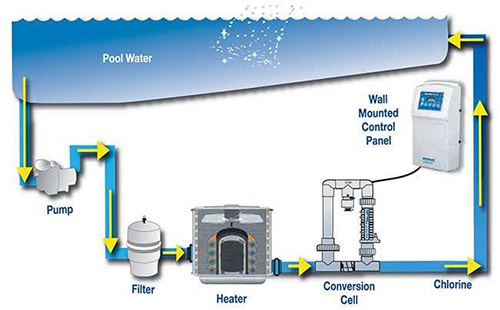
Salt Chlorinators, however do not operate with these peaks and valleys. It keeps the level of chlorine constant by essentially drip-feeding the chlorine it produces. Many even have a super chlorinate setting to shock the pool should you require it.
It’s easy to adjust chlorine levels
You can continue using the same test kits and test strips to test the water as your pool is still a “chlorine pool”. The difference now though is when adjusting your chlorine level you will change the output setting on the salt system as opposed to adding your chlorine of choice
It’s easier to manage your stabilizer
A common problem for non-salt pools is high levels of stabilizer from the overuse of chlorine sticks or tabs. This is a very dense topic but sticks contain stabilizer and overuse can yield stabilizer levels over 100ppm where chlorine can become significantly less effective.
A salt system directly replaces any in-line chlorinator, off-line chlorinator, blue bobbers and rubber ducks in your pool. It does their job better with finer control and more flexibility.
The water is much softer
This is something most people rave about once switching. For years saltwater baths have been used to help people with skin irritations, and even burn victims to help relieve pain and aid in the skin cleansing process. Now the salt level in a salt pool is not to the level used in these examples but the water is noticeably softer and more pleasant to swim in